In the tenth and final part of this series of blogs on Ruskin & the Communists, Stuart Eagles outlines what happened to the Guild’s Totley estate after Riley’s departure, when it was successively under the management of David Downs and rented by George Pearson. Finally, he turns to an assessment of the legacy of Totley, an uneasy yet productive marriage of Ruskinian communitarianism and transitional British socialism…
RUSKIN & THE COMMUNISTS
(PART 10):
TOTLEY AFTER RILEY & THE LEGACY OF AN UNEASY MARRIAGE
Stuart Eagles
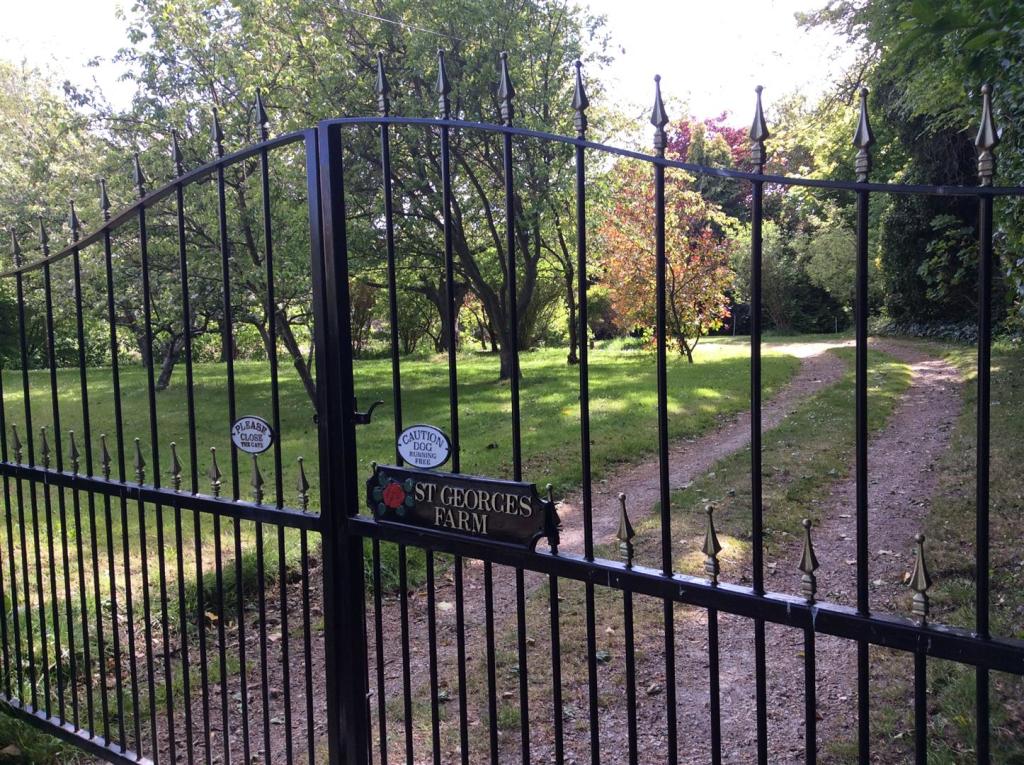
There is no doubt that the two phases of the Totley experiment—the first, a collaboration between Ruskin and the Sheffield communists; the second, William Harrison Riley’s attempt to establish a socialist commonwealth that was ultimately undermined by Ruskin and his “special agent”, David Downs—were the most interesting and consequential periods in the history of the thirteen acres.
Following Riley’s departure from Totley in the summer of 1880. and his emigration to America in the autumn, the farm fell solely into the care of David Downs. It was a situation that endured until 1886.
We should remember that David Downs (1818-1888) was Ruskin’s gardener, but he had long been in the Ruskin family’s employment. Ruskin turned to him whenever one of his many social projects needed a practical man on the ground to provide supervision. Of all Ruskin’s servants, there was none was more heavily implicated in what Downs called—in his letter to Henry Swan quoted last time—Ruskin’s “anxiety to promote a good cause”. It is quite possible that the concern Downs expressed for his master’s health was matched—even trumped—by a sense of personal resentment about being taken far away from his core duties as a gardener, work in which he had originally been engaged by Ruskin’s parents. It is doubtful that Downs had much say in his gradual transformation into the son’s general factotum.
Downs was born in the parish of Winslade, three miles south of Basingstoke, Hampshire. His father, also David Downs, was a farmer who leased Southwood Farm from 1815 until 1839. In his twenties, Downs moved to Denmark Hill where he set himself up as a gardener. In 1847 he married Maria Cowler (1813-1887), the daughter of James Cowler, a shoemaker (appropriately enough, given the origins of the Totley experiment and the pivotal role played in it by shoemaker George Shaw). When Ruskin moved to Brantwood, Downs and his wife moved with them and mostly lived nearby.
Totley was the 60-year-old Downs’s final posting. He had been sent on many previous missions: he was dispatched to oversee Ruskin’s projects at Carshalton, the London street-sweepings, and the Hinksey road-diggings. He also accompanied Ruskin on his travels: to Keswick in 1867, Abbeville in 1868 (to study market gardening, in fact), and to other parts of France and Italy in 1870.
Scant evidence of the Totley farm’s fortunes survive from this period. Presumably Downs and his family lived in the St George’s farmhouse. As he grew older and more rheumatic, and his general health deteriorated, there must have been diminishing agricultural work going on there. Apart from the reported appointment of a gardener, Albert Fox, there is no indication of further hired help, so assistance was presumably provided by volunteers.
Some sources refer to the estate as “Mickley Botanical Gardens” and an attempt under Downs to try and show the best methods of nurturing fruit-trees and cultivating strawberries, currants and gooseberries. So much was first referred to in Ruskin’s Master’s Report (1879) but there is little evidence that the plan was realised in practice (see Ruskin, Works, 30:21).
About nine or ten months after Riley’s departure, Ruskin wrote remorsefully to Downs,
“Suppose we sell all that good-for-nothing land at Totley, and take somebody else in, for once—if we can—instead of being always taken in ourselves, for a change?’ (Ruskin to Downs (24 April 1881), qtd in Ruskin, Works, 30:xxvii n.)
Ruskin’s mental health suffered periodic relapses, and each time he became a little weaker and less capable. Totley’s persistently disappointing financial returns worsened further, blamed in the Master’s Report on poor weather and Downs’s health (see Ruskin, Works, 30:40, and Goldsmith, p. 67).
By the time Ruskin wrote his Master’s Report in 1884, he was utterly disillusioned, and referred dismissively to the “thirteen acres of very poor land” (Ruskin, Works, 30:71).
According to evidence unearthed by Mark Frost, by early 1887 David and Maria Downs had been removed from Totley by the Junior Trustee of the Guild of St George, George Thomson (1842-1921), the successful manager of a textile co-partnership in Huddersfield (see Frost, p. 172).
As early as May 1885, Ruskin had indicated to Henry Swan, his museum curator in Sheffield, that advancing years were taking their toll on Downs: “it is hard for him to get up hills now’ (4 May 1885).
David and Maria Downs had certainly gone from the farm by the time George Pearson took on the tenancy in February 1887. Pearson accurately recalled in the Sheffield Daily Telegraph in January 1926:
“I have been here 39 [years] and before me was one of Ruskin’s old gardeners, a Mr Downs. He was here seven years or more as manager, and a man named Albert Fox as gardener. […] Mr Downs came to manage the place; but he did not make it a success. I think he found out that commercial gardening was rather different from private.” (9 January 1926)
Without further information, there are too many candidates for Albert Fox to be able to make a definite identification.
Soon after Downs and his family left the Totley estate, Maria Downs died (16 March 1887) of “senile decay” (old age) at the age of 74. David Downs was described on her death certificate as a former gardener. Maria died at the Abbeydale Almshouses built by the Licensed Victuallers’ Association, and located on Abbeydale Road South, in the neighbouring parish of Dore. Although this suggests that the couple had fallen upon very hard times, it is notable that when David Downs died at Abbeydale on 14 June 1888, his estate was valued at £426 2s. 10d (over £70,000 today). Downs died aged 70 (though his death certificate said 71), of “serous apoplexy and senile decay” (a cerebral malady such as an ischemic stroke, and old age).
Both Maria and David Downs were buried in Dore. The entry for David Downs, dated 18 June 1888, states under “Abode”, “Formerly St George’s Guild”.
Ruskin’s sympathy with Downs probably never wavered. In November 1881 he had castigated Henry Swan for apparently snubbing Downs. His letter is interesting, not merely for expressing his own loyalties, but for exposing Swan’s different perspective—one that would be articulated in print when Henry Swan’s son, Howard, wrote about Downs in 1900.
“As for poor Downs,—it is not your not going to see him—but that you did go to see Riley […]—and that now, you take no notice of him—or he thinks not—in the street when you meet. (30 November 1881, qtd in Frost, p. 171, and partially in Viljoen, p. 603)
GEORGE PEARSON
George Pearson (1857-1943) and his family took on St George’s Farm, Totley, in February 1887. Henceforward, the 13 acres would be cultivated as a market garden. The Pearsons, who formally became tenants of the Guild of St George, unsurprisingly found the estate to be in quite a state of neglect. In the interview George gave to the Sheffield Daily Independent shortly after his 80th birthday, he recollected:
“I had no experience of farms or land development. I started work at a coal mine when I was nine years of age and worked in mines until I was 23. Then for seven years I was a quarryman and mason.” (17 January 1938)
This was true, but might have acknowledged that his father and grandfather had farmed the 22 acres of Oxclose or Ox Close Farm, Brampton for decades before he was born. More pertinently, George himself actually grew up there.
Pearson declared in the same interview that “Edward Carpenter’s political ideals and mine […] were the same”, and the Independent branded Pearson “a pioneer of the Labour Party in Sheffield” who, by 1938, was “one of Sheffield’s last remaining personal links with John Ruskin and Edward Carpenter”. The newspaper reported that Pearson had letters from Carpenter written when the old socialist sage was 83, just before his final illness. Certainly, one letter to Pearson written by Carpenter shortly before his 83rd birthday survives in Sheffield Archives’ Carpenter Papers (see Sheffield Archives: MSS/833, letter from Edward Carpenter to George Pearson (11 August 1927).
Edward Carpenter recalled in his memoirs how, in the 1880s, Pearson accompanied his friend, companion and fellow Christian Socialist, John Furniss (1852-1922), as he strode “five or six miles over the moors, in order to speak at the Pump or the Monolith, and then [strode] back in the middle of the night”—one of the first people to preach “modern socialism in the streets of Sheffield” (Carpenter (1916), p. 133).
It was because of this political connection that Carpenter had, in the first place, suggested to Pearson that he might take on St George’s Farm. Pearson was interested, and the Guild proved amenable to the idea.
The history of the farm in Pearson’s time falls outside the scope of a blog series dedicated to Ruskin & the Communists. Even though Pearson himself was a lifelong socialist, Edward Carpenter was justified to observe that, under the Pearsons, the farm fell
“not exactly into a pasture-ground for the commercial Dragon, but into a fairly ordinary tenure under the St George’s Guild” (Carpenter (1908) p. 208).
Sally Goldsmith has elegantly traced the development of the friendship between Pearson and Furniss from when they worked together at Glen House Quarry in the 1870s and lived in Walkley, and has detailed how they later set up a collective venture at Moorhay Farm (see Goldsmith, pp. 77-87).
Goldsmith has shown, too, that when the Pearson family eventually purchased the farm from the Guild for £800 in 1929, the organisation invested the money in its Wyre Forest Estate at Bewdley (now called Ruskin Land). The Totley sale helped the Guild to purchase Uncllys Farm and to make a series of improvements to its other properties in the woodland there (see Goldsmith, p. 84).
THE LEGACY OF THE TOTLEY EXPERIMENT
Reflecting on the first Annual General Meeting of the Guild held in Birmingham in February 1879, a year after Ruskin had lost his mind and Riley had been appointed to manage the farm, the Sheffield Independent sounded a warning about Ruskin’s ideas on land management. Unsympathetic as it was, the report, though it exaggerates and therefore misrepresents some of Ruskin’s view, made valuable points that the ‘Companions Militant’ of the Guild (the active working-class retainers) might have benefitted from hearing earlier. As it was, they learned the hard way.
“Mr Ruskin recognises the anomaly of our land laws, which make land difficult of acquisition, and encourage the accumulation of large estates in the hands of owners with only a life interest. […] He would go back to the spade and the spinning wheel, and those primitive states of society in which each little community, or even each family, manufactured all it required, and grew its own food. [… N]o disciple of Mr Ruskin, who is not a visionary or a lunatic, can feel any assurance that success lies before him. […] We know no greater delight than to take up a volume of Mr Ruskin; no greater mistake than to put his theories of political economy into practice. (25 February 1879: my emphasis)
The judgement is too harsh, and politically motivated, but a collaboration between Ruskin and communists in a practical farming venture was always going to be fraught. It was not necessarily either Ruskin’s ideas, or those of the various communists, that were impracticable, though. Ruskin’s experiment at Totley was poorly managed in every phase of its development, usually because of disputed authority, general disagreement, and a lack of direction.
Such difficulties might have been overcome had those of Ruskin’s disciples who were literally on the ground succeeded in conquering differences among themselves. Yet, it must be admitted, that Ruskin’s tendency to interfere, and his unyielding adherence to his own inflexible principles, were always likely to cause friction with the communists and socialists with whom he agreed to collaborate. Each party in the relationship could only go so far in accommodating the world-view of the other.
W.H.G. Armytage is surely right, however, to have concluded that “The Totley experiment was not without significance” (Armytage, p. 298). “Ruskinism”, he went on, “provided an enduring nutriment to the Utopian tradition” (Armytage, p. 300).
Edward Carpenter’s biographer, the historian Sheila Rowbotam, fleshes out this assessment in delivering her own.
“There existed in Sheffield in the mid 1880s a radical political consciousness which had been formed by many intricate and interweaving strands”, she explained (Rowbotham (1993) p. 276). Ruskin’s Totley experiment was an important part of that mix, and it was “carried into the origins of modern socialism in Sheffield”. Specifically:
“The Ruskinian concept of community transcending class and atomistic individualism entered Sheffield socialism from the start.” (Rowbotham (1993) p. 277)
Rowbotham identifies the main area of shared political interest that helped, for however short a time, to facilitate the uneasy collaboration between Ruskin and the communists and socialists.
“These dreams of wellbeing nurtured qualitatively different values and relationships which might inform a common culture and replace those upon which capitalism thrived”,
she argued. Yet, eventually, somehow
“the vision of a new way of life slipped away” (Rowbotham, p. 278).
Edward Carpenter unveils a key piece of the jigsaw-puzzle. He wrote that William Harrison Riley, like the wandering minstrel, Joseph Sharpe, “and indeed a number of others whose names are now unknown or forgotten”—including the original Totley communists, in fact, most of whose names have now been recovered in the research shared in this blog series—
“did a great work in their time, bridging over the interval between the old Chartism of ’48 and the Socialism of the early eighties, and keeping alive, during the smug days of the mid-Victorian epoch, the flame of revolutionary ardour and belief in utopian things; and in their spheres they command a debt of gratitude from us, as pioneers of the modern movement.” (Carpenter (1908) p. 209)
Carpenter is here giving the likes of Riley their due. Riley had complained in the Manchester Labour Press that the young socialists of the 1890s had forgotten the men of the 1870s like himself “who stood in the gap” (29 September 1894). We are all apt to forget those who influence us as we absorb their legacy, and, taking it for granted, unconsciously build upon it.
But Carpenter did not forget the likes of Shaw, Mary Ann Maloy, Joseph Sharpe, and William Harrison Riley. Like Carpenter himself, they helped to bridge the gap between the old radicalism of the mid-nineteenth century and the new socialism of the 1880s and 1890s. The greatest of the Totley experiment’s legacies was to provide substance and strength to that vital bridge which led to the social improvements that characterized the twentieth century and especially benefitted the working classes.
Ruskin had powerfully articulated a critique of modern industrial capitalism and the orthodox notions of political economy that underpinned it. His message resonated strongly with disaffected workers, particularly those compelled to feed the smoke of the factories and forges of northern England. It was in large measure thanks to Ruskin that they dared to hope that an Arcadian idyll might provide an altogether healthier and happier alternative to their dark reality.
If Utopia yet proved elusive, or at best only ever temporary, and if Paradise was not after all found in the English countryside of the nineteenth century, then at least the effort made to establish it there and then nevertheless proved formative for those who, together with Ruskin, tried to transform
“some small piece of English ground, beautiful, peaceful, and fruitful” (Ruskin, Works, 27:96).
Sources
Armytage, W.H.G: Heavens Below: Utopian Experiments in England, 1560-1960 (London: Routledge & Kegan Paul, 1961)
Carpenter, Edward: Sketches from Life in Town and Country, and Some Verses (George Allen, 1908)
Carpenter, Edward: My Days and Dreams (London: George Allen and Unwin, 1916)
Frost, Mark: The Lost Companions and Ruskin’s Guild of St George: A Revisionary History (Anthem Press, 2014)
Goldsmith, Sally: Thirteen Acres: John Ruskin and the Totley Communists (Guild of St George, 2016)
[Pearson, George] (G.P.T.): “Ruskin Communism at Totley” in Sheffield Daily Telegraph (9 January 1926)
Rowbotham, Sheila: “‘Our Party is the People’: Edward Carpenter and Radicalism in Sheffield” in Protest and Survival: Essays for E. P. Thompson, eds. John Rule & Robert Malcolmson (Merlin Press, 1993) pp. 257-278
Viljoen, Helen Gill: The Brantwood Diary of John Ruskin (New Haven, CT: Yale University Press, 1971
Please send any feedback to contact@stuarteagls.co.uk